As the sacred days of Dhul Hijjah unfold, Muslim households around the world prepare for one of the most significant events on our calendar: Eid ul Adha. For families living in New England, creating a festive, deeply spiritual environment at home requires intentionality. Amid the hustle of regular work weeks, school schedules, and worldly distractions, it is easy for Eid to feel like a rushed morning prayer followed by a standard dinner. However, with a little planning, we can transform this holiday into a milestone experience that our children look forward to all year long.
Celebrating an intentional Eid means shifting our focus from mere consumerism to the profound spiritual lessons of sacrifice, devotion, and community legacy left to us by Prophet Ibrahim (AS). At Masjid Al-Mustafa, we are dedicated to helping our community capture the true spirit of this season. By grounding our celebrations in our local mosque in Waterbury, we give our families a sense of belonging and a collective space to experience the joy of the believers.
1. Maximize the First Ten Days of Dhul Hijjah as a Family
An intentional Eid celebration does not begin on the morning of Eid; it is built during the ten days leading up to it. The Prophet Muhammad (peace be upon him) taught us that there are no days in which righteous deeds are more beloved to Allah than these ten days. To build anticipation at home, treat these days like a spiritual countdown.
Gather your family for a few minutes each evening to discuss the virtues of Dhul Hijjah. Encourage older children to fast, especially on the Day of Arafah, and involve younger children in making a daily charity jar. By elevating the spiritual temperature of the home early on, the actual day of Eid feels like a hard-earned victory and a true spiritual milestone, rather than just another day off from work.
2. Revive the Beautiful Sunnahs of Eid Morning
One of the best ways to make Eid memorable for children is to lean heavily into the prophetic traditions. These rituals give the day a unique structure that distinguishes it from any ordinary weekend. Wake up early as a family, perform ghusl (the ritual bath), and wear your finest clothes. The Prophet (peace be upon him) favored putting on one’s best garments to show gratitude for Allah’s blessings.
Before heading out the door, remember a key distinction for Eid ul Adha: unlike Eid ul Fitr, it is Sunnah *not* to eat until after the Eid prayer, ideally from the meat of the sacrifice if it is available early. As you drive to the prayer space, fill the car with the sounds of the Takbeerat (chanting praises of Allah). Reciting these words aloud together sets an immediate tone of joy and collective worship.
3. The Power of Community Prayer and Belonging
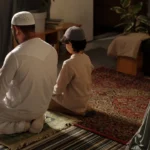
Standing shoulder-to-shoulder with hundreds of believers for the Eid prayer is an irreplaceable experience for a developing child. It visualizes the global Ummah on a local scale. Seeing their friends, neighbors, and teachers gathering in one place to praise Allah builds a powerful sense of religious identity.
For students attending our islamic school in Waterbury, seeing the school community transition into the Masjid courtyard for Eid festivities bridges the gap between daily education and real-world faith. They realize that their identity as Muslims extends far beyond the classroom walls; they belong to a vibrant, multi-generational community that celebrates together, supports one another, and shares a unified purpose.
4. Bring the Story of Prophet Ibrahim (AS) to Life
Eid ul Adha is fundamentally about the family of Prophet Ibrahim, Hagar, and Prophet Ismail (peace be upon them all). Their collective trust in Allah (Tawakkul) and their willingness to sacrifice what they loved most is the bedrock of this holiday. Use the days around Eid to read these stories together as a family.
Don’t just recount the historical facts; connect the narrative to modern life. Ask your children questions like: *“What does sacrifice look like for us today? How can we sacrifice a little bit of our time or comfort to help someone else or to please Allah?”* When children understand that the Udhiya (Qurbani) is a living continuation of this ancient legacy, the act of giving charity and sharing meat becomes deeply meaningful rather than just a traditional chore.
5. Establish Unique, Low-Stress Family Traditions
Intentionality does not mean perfection. Often, parents stress themselves out trying to create a “picture-perfect” Instagram Eid, which can lead to tension and arguments on the day of celebration. Instead, focus on simple, consistent traditions that your children will look back on with fondness when they grow up.
This could be a specific Eid morning breakfast casserole that you only make once a year, an annual family photograph in the exact same spot, or a dedicated “family game night” on the evening of Eid. Decorate the house together the night before. Let the children help hang up lights and banners. It is the joy, warmth, and laughter within the home that creates lasting memories, not the extravagance of the gifts.
6. Practice the Spirit of Sharing and Inclusivity
A core element of Eid ul Adha is the distribution of meat from the sacrifice, which is traditionally divided into three parts: one-third for the family, one-third for friends and relatives, and one-third for the poor and needy. Even if your Qurbani is done internationally via an agency, you can still practice the spirit of this rule locally.
Bake treats with your children and deliver them to your neighbors, both Muslim and non-Muslim. This teaches your children the prophetic etiquette of excellence in neighborly relations (Ihsan). Additionally, look out for those in our Waterbury community who may be new to the area, living alone, or converts who do not have extended family nearby. Inviting someone over to share a meal can completely transform their Eid experience and teaches your children the true meaning of Islamic brotherhood and sisterhood.
Conclusion: Cultivating Hearts of Gratitude
At the end of the day, an intentional Eid is one that leaves our hearts filled with gratitude to Allah and closer to our community. By anchoring our families to the spiritual atmosphere of Masjid Al-Mustafa and reinforcing these values through conscious home environments, we ensure that the beauty of Islam is passed down firmly to the next generation.
We wish you and your loved ones a blessed, joyous, and spiritually uplifting Eid ul Adha. May Allah accept your good deeds, your prayers, and your sacrifices during these magnificent days. Eid Mubarak from our family to yours!
May our homes always be filled with the light of faith and community warmth.