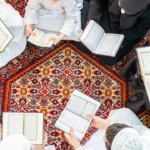
As the sunset marks the end of Dhul Hijjah and the crescent moon of Muharram rises, the global Muslim community enters a brand new Hijri year. Unlike conventional New Year celebrations that are often accompanied by loud festivities and superficial resolutions, the Islamic New Year arrives with a quiet, sacred solemnity. Muharram is one of the four sacred months explicitly designated by Allah in the Holy Quran, a period wherein spiritual rewards are magnified, and believers are encouraged to seek deep personal reformation. It is a time for quiet introspection, profound remembrance, and a conscious recalibration of our spiritual goals as individuals and, more importantly, as families.
For Muslim families living in the West, the arrival of the new Islamic year offers a valuable teaching moment. It provides a natural pause button in our busy lives to gather our households and reflect on the passing of time, the temporary nature of this world, and the ultimate destination of our souls. Whether joining communal gatherings at the local mosque in Waterbury or discussing the historic sacrifices of the prophets around the dinner table, this sacred month calls upon us to intentionally curate a home environment centered on faith. By actively integrating Muharram reflections into the family unit, we can ensure that our children grow up with a deep, emotional connection to the Islamic calendar and the timeless lessons it carries.
1. Understanding the Sacredness of Muharram
The Prophet Muhammad (PBUH) referred to Muharram as “the Month of Allah,” emphasizing its unique spiritual status. In Surah At-Tawbah, Allah declares that there are twelve months in the Islamic calendar, four of which are sacred. During these specific months, believers are commanded not to wrong themselves, meaning we must be exceptionally vigilant against committing sins, falling into spiritual laziness, or engaging in interpersonal conflicts. Conversely, righteous deeds performed during this month carry a vastly multiplied weight in the sight of our Creator.
To bring this concept alive for children, parents can introduce the idea of a “spiritual clean slate.” Just as a new school semester or a new calendar year prompts us to buy fresh notebooks and set new goals, the Islamic New Year is our ultimate spiritual refresh. Sit down as a family and discuss how we can honor the sanctity of Muharram. This can be as simple as committing to a collective household goal, such as making sure the morning and evening supplications (Adhkar) are read together, or creating a family “good deed chart” where children track their acts of kindness, voluntary prayers, and Quranic reading throughout the month.
2. The Lesson of the Hijrah: Standing Firm and Sacrificing for Faith
The Islamic calendar does not begin with the birth of the Prophet (PBUH), nor does it begin with the first descent of revelation. Instead, under the leadership of Umar ibn al-Khattab (RA), the Sahaba chose the *Hijrah*, the historical migration of the early Muslim community from Makkah to Madinah, as the defining starting point of the Islamic era. The Hijrah was not a mere change of geography; it was a profound movement of sacrifice, courage, and ultimate dedication to the preservation of truth. The early Muslims left behind their ancestral homes, their businesses, and their extended families solely to worship Allah freely and establish a society built on justice.
Teaching the profound narrative of the Hijrah helps children build a resilient identity, a standard of character development that is central to the mission of our islamic school in Waterbury. In an era where Muslim youth frequently face peer pressure and conflicting societal values, understanding the sacrifices of the Sahaba teaches them that standing up for their faith is a badge of honor. Parents can read stories of the Hijrah during family circles, highlighting how the Prophet (PBUH) put his absolute trust in Allah while systematically planning his journey. This teaches our children that true faith requires a combination of smart, practical preparation and unwavering spiritual reliance.
3. Embracing the Virtues of Fasting on the Day of Ashura
The undisputed crown jewel of the month of Muharram is the 10th day, known as the Day of Ashura. When the Prophet Muhammad (PBUH) migrated to Madinah, he found the Jewish community fasting on this day. When he inquired about its significance, they explained that it was the day Allah delivered Prophet Musa (AS) and the Children of Israel from the tyranny of Pharaoh, splitting the Red Sea to grant them freedom. Recognizing our shared prophetic heritage, the Prophet (PBUH) stated, “We have more right to Musa than you,” and he fasted that day, encouraging his followers to do the same. He also recommended fasting either the 9th or the 11th of Muharram to distinguish the Muslim practice.
The spiritual reward for fasting on the Day of Ashura is immense: the Prophet (PBUH) explicitly stated that he hoped it would expiate the sins of the entire preceding year. Preparing the household for Ashura can become a beautiful annual family tradition. Involve your children in the process by calculating the dates together, waking up as a family for an inspiring Suhoor meal, and preparing a special Iftar to share. As you sit together waiting for the Maghrib Adhan, use those precious, high-acceptance moments of dua to pray for the relief of oppressed communities across the globe, explicitly linking Musa’s historic victory over tyranny to our modern-day hopes for peace and justice.
4. Cultivating Prophetic Resilience through Historical Reflections
Muharram is also a month deeply intertwined with the themes of trial, patience, and ultimate spiritual victory. Beyond the salvation of Prophet Musa (AS), classical Islamic traditions note that many major historical breakthroughs for the prophets occurred in this month. It is a period that reminds us that trials are an inevitable element of the human experience, but they are always followed by divine relief if faced with patience (Sabr) and faith.
Later in Islamic history, the 10th of Muharram also became the day on which the beloved grandson of the Prophet (PBUH), Al-Hussain ibn Ali (RA), achieved martyrdom at the tragic Battle of Karbala. Hussain (RA) stood firmly upon the principles of truth, integrity, and justice, refusing to compromise his moral values even when facing overwhelming odds. By introducing our families to both the victory of Musa (AS) and the principled stand of Hussain (RA), we provide our children with two sides of the same spiritual coin: that true success is not measured by worldly dominance, but by our unshakeable commitment to righteousness, regardless of the challenges we face.
Conclusion: Carrying the Light of Muharram Forward
The dawn of the New Hijri Year 1448 should not pass through our homes unnoticed or uncelebrated. It is a golden opportunity to reset our family dynamics, wash away old negative habits, and plant the seeds of spiritual growth that will bear fruit for the rest of the year. Muharram shows us that time is moving quickly, and every passing year brings us closer to our meeting with Allah.
By transforming our homes into spaces of learning, prayer, and fasting during this sacred month, we teach our children to measure their lives through the lens of Islam. Let us make the intention to step into this new year with elevated standards of character, deeper dedication to our prayers, and a unified family unit striving together for the sake of the Almighty.
Marking time with devotion, learning from history, and building a legacy of faith at home.