Raising confident, self-assured young women in today’s cultural climate presents a unique set of challenges for parents. Modern society subjects girls to an unrelenting barrage of messaging regarding physical appearance, popularity, and social validation. From algorithmic social media feeds to commercial advertising, young women are frequently conditioned to believe their self-worth is tied to public approval, physical exposure, and adherence to fleeting fashion trends. This hyper-focus on external appearance often leads to body image struggles, anxiety, and a fragile sense of personal identity during critical developmental years.
For Muslim families, navigating these cultural dynamics requires presenting an empowering, elevated alternative. In Islamic tradition, modesty (Haya) is not a restrictive limitation or a sign of meekness; it is a profound source of dignity, personal strength, and spiritual freedom. True confidence develops when a young woman understands that her ultimate value resides in her character, intellect, faith, and contributions to society. At our full-time islamic school in Waterbury, we provide an environment where young girls are empowered to embrace modesty as a badge of honor, develop unwavering self-worth, and excel as confident leaders in their communities.
1. Reframing Modesty (Haya) as Empowerment and Freedom
In modern secular discourse, modesty is sometimes misunderstood as a passive or restrictive concept. However, when understood through the prophetic lens, Haya is an active, protective virtue that guards a person’s dignity and spiritual autonomy. Modesty encompasses not only physical dress, but also speech, deportment, gaze, and inner heart states. It teaches individuals to respect themselves and demand respect from others, establishing healthy boundaries in all social interactions.
When young girls are taught the spiritual philosophy behind modesty, their perspective shifts completely. They realize that choosing to dress modestly and carry themselves with dignity is a conscious act of liberation. It frees them from being reduced to physical objects evaluated by superficial societal standards. By reclaiming control over who has access to their physical presence, young women claim their right to be judged by the strength of their minds, the integrity of their character, and the quality of their ideas.
2. Grounding Identity in Divine Worth Over Social Validation
The root cause of low self-esteem in many young women is the reliance on external validation. When self-worth depends on likes, comments, peer approval, or fitting into specific social circles, confidence fluctuates wildly. Teaching young girls that their dignity is granted directly by their Creator provides an unshakeable foundation for mental resilience and emotional stability.
In a faith-centered educational setting, girls learn about the remarkable female role models in Islamic history, such as Khadijah bint Khuwaylid, a successful entrepreneur and pillar of strength; Aisha bint Abi Bakr, a master scholar of law and medicine; and Nusaybah bint Ka’b, a courageous protector and leader. Studying these formidable women shows young girls that faith, modesty, and public leadership go hand in hand. They see that true greatness comes from devotion to noble principles, academic excellence, and service to humanity.
3. The Value of Supportive Female Peer Groups and Mentors
Environment plays a pivotal role in shaping an adolescent’s self-image. In a standard secular school setting, a Muslim girl wearing a hijab or choosing to abstain from unwholesome social trends may frequently feel isolated or compelled to justify her choices. Continually swimming against the cultural tide can be mentally exhausting for a developing teenager, sometimes tempting them to compromise their values to fit in.
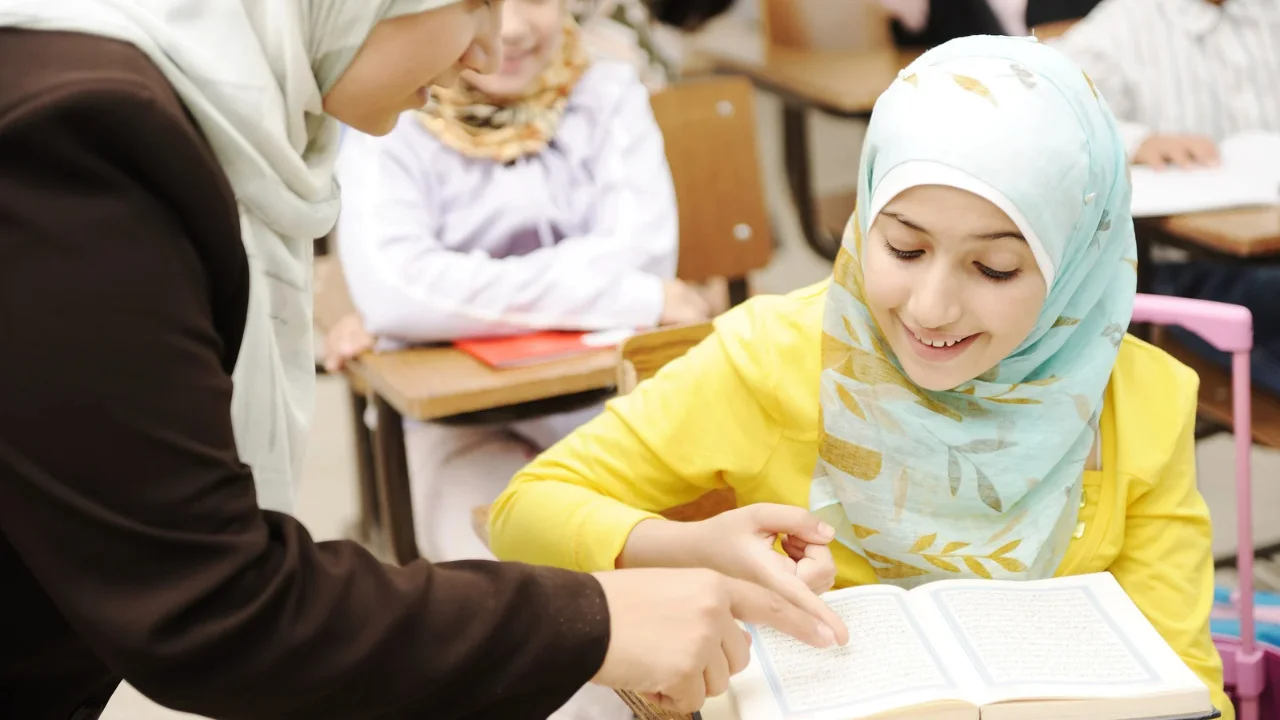
Surrounding young women with a wholesome peer circle transforms their educational experience. In an environment where modesty, prayer, and academic ambition are the shared norm, girls encourage and uplift one another. They form deep friendships rooted in shared values rather than competitive vanity. Furthermore, guided by dedicated female educators and mentors who exemplify professional competence and spiritual grace, young girls see firsthand how to navigate the modern world with poise, intelligence, and unwavering faith.
4. Nurturing Leadership, Voice, and Academic Excellence
Cultivating modesty does not mean encouraging girls to be quiet, passive, or hidden from public life. On the contrary, Islamic tradition calls upon every believer, male and female, to speak out against injustice, seek knowledge continuously, and contribute actively to the welfare of society. True confidence empowers young women to use their voices effectively, articulate their views with clarity, and step into leadership positions.
In a supportive classroom environment, girls are encouraged to participate vigorously in science, mathematics, literature, public speaking, and community service. They learn to debate ideas constructively, present research projects, and organize charitable initiatives. By mastering academic disciplines and developing strong public speaking skills, young women learn that their thoughts and contributions carry immense weight, building an authentic self-assurance that carries over into university life and future professional careers.
5. Partnering with Families to Reinforce Self-Worth at Home
Developing lasting confidence in young girls requires seamless collaboration between educators and the home environment. Parents play the most fundamental role in shaping how their daughters view themselves. When home life prioritizes internal character, effort, and spiritual growth over superficial aesthetics or material achievements, girls internalize a healthy, balanced sense of self-worth.
Parents can reinforce this foundation by engaging in open, meaningful conversations with their daughters about media consumption, peer dynamics, and societal expectations. Affirming a young girl’s intellect, kindness, and spiritual progress gives her the emotional security needed to withstand external peer pressures. Together, a supportive home and a faith-based educational environment create a protective ecosystem where young women flourish into strong, dignified, and conscious leaders.
Conclusion: Inspiring the Next Generation of Women Leaders
Empowering young Muslim girls is not about pushing them to conform to external societal trends, nor is it about restricting their potential. It is about equipping them with an unshakeable sense of divine identity, moral clarity, and intellectual strength.
When we root a young woman’s confidence in modesty, noble character, and academic excellence, we give her a gift that lasts a lifetime. She steps into the world not seeking approval, but offering leadership, compassion, and wisdom to a world in deep need of her light.
Nurturing strong minds, noble hearts, and dignified identities for tomorrow’s leaders.