Parenting in the twenty-first century presents challenges that previous generations could have scarcely imagined. Today’s children are growing up in an environment where the boundaries between physical and digital reality are increasingly blurred. From smartphones and tablets to algorithmic social media feeds and online gaming environments, young minds are subject to an unprecedented influx of information, social comparison, and cultural messaging. While these digital tools offer remarkable opportunities for learning and global connection, they also expose children to peer pressure, cyberbullying, distorted self-images, and values that frequently conflict with traditional family ethics. Parents are left grappling with a critical question: how do we raise self-assured, morally grounded children who can thrive in a hyper-connected world without losing their identity?
Building true confidence in a child requires more than just restricting screen time or offering superficial encouragement. It demands an environment that provides a firm sense of purpose, a clear moral compass, and a supportive community. This is where the holistic model of full-time faith-based education plays a transformative role. By enrolling your child in a dedicated islamic school in Waterbury, you surround them with an ecosystem designed to build emotional resilience, intellectual capability, and unwavering spiritual confidence from the ground up.
1. The Vulnerability of Youth in the Digital Ecosystem
To understand why modern children struggle with confidence, one must examine the nature of today’s digital landscape. Social media platforms and online subcultures are engineered around metrics of immediate validation: likes, views, comments, and follower counts. For a developing adolescent, this environment can turn self-worth into a fluctuating variable dependent on public approval. Furthermore, the constant exposure to curated, idealized lifestyles creates an artificial standard of success, appearance, and popularity that no real person can consistently maintain.
When children lack a deeply rooted internal identity, they become exceptionally vulnerable to these external pressures. They may feel compelled to compromise their personal morals, adopt harmful behavioral trends, or hide their religious practices simply to gain acceptance from online or offline peer groups. The resulting anxiety and internal friction can undermine academic performance, strain family relationships, and lead to a persistent feeling of inadequacy. Counteracting this vulnerability requires instilling a deeper, unshakeable standard of self-worth that is independent of digital applause.
2. Grounding Identity in Purpose and Divine Worth
Full-time Islamic schooling addresses this identity crisis at its root by teaching children that their ultimate value comes from their Creator, not from societal trends or social media algorithms. In a faith-centered classroom, students are taught that they are intentional creations of Allah, endowed with unique gifts, responsibilities, and an innate dignity. This foundational understanding completely transforms a child’s self-perception.
When a young person understands that their purpose in life is to cultivate noble character, seek knowledge, and serve humanity, the pressure to conform to superficial societal standards loses its power. They no longer feel the need to seek validation from online trends because they are grounded in a timeless, divine purpose. This inner certainty forms the bedrock of genuine self-confidence, allowing students to walk through diverse social spaces with head held high, proud of who they are and what they stand for.
3. The Role of Wholesome Peer Circles and Role Models
A child’s social circle is one of the most powerful influences on their development. In a secular environment, a Muslim student may often feel like the odd one out when asking for a quiet space to pray, opting out of unwholesome activities, or dressing modestly. Continually having to justify one’s choices can be exhausting for a young person, sometimes leading them to quietly abandon their practices to avoid feeling isolated.
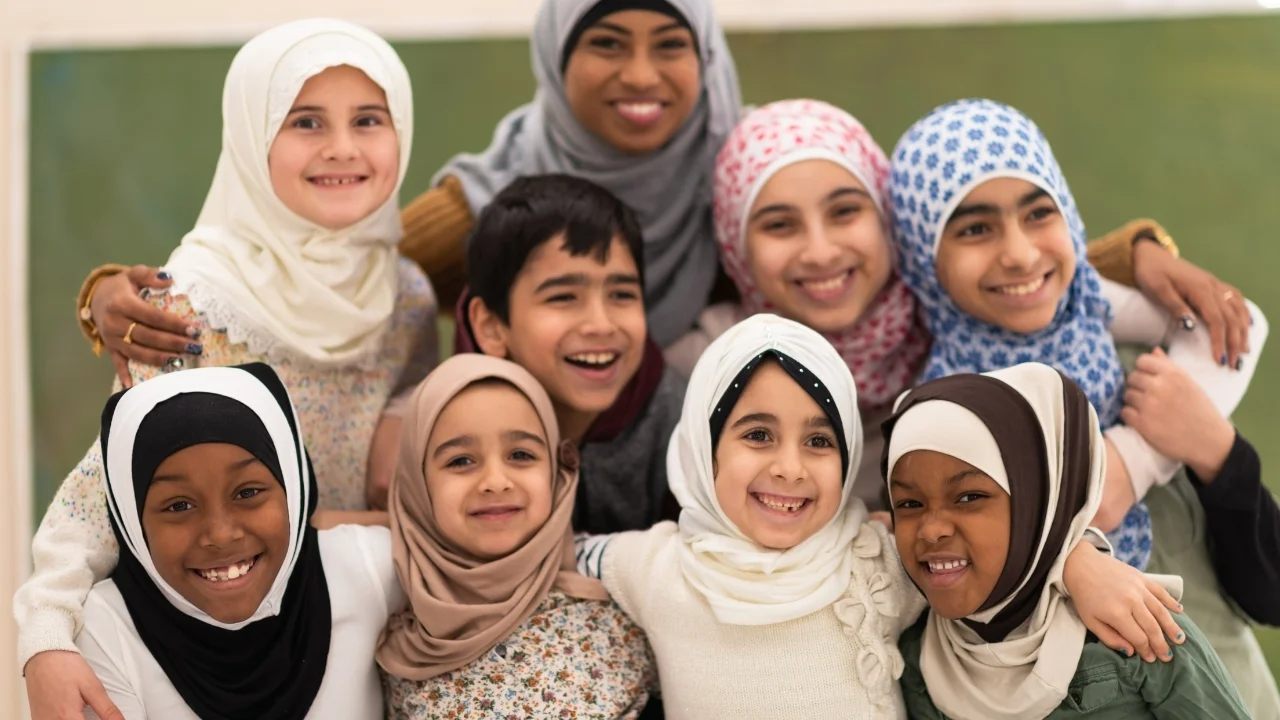
Full-time Islamic education eliminates this social friction by surrounding students with peers who share their core values and daily routines. In this environment, practicing faith is not an anomaly; it is the shared norm. Standing in congregational prayer, engaging in ethical discussions, and striving for academic excellence are celebrated by classmates and teachers alike. This positive peer culture provides strong emotional reinforcement. Furthermore, students are guided by dedicated teachers who serve as living role models of professional competence and moral integrity, showing youth what grounded leadership looks like in daily life.
4. Connecting the Classroom to the Community Anchor
An effective educational experience extends beyond classroom walls and integrates into the broader life of the local community. When children see that their daily academic lessons align with their family life and their local house of worship, their worldview becomes harmonious and complete. This seamless connection is further strengthened through active involvement with the central mosque in Waterbury, which serves as a vibrant hub for youth activities, family gatherings, and spiritual growth.
By regularly participating in mosque-centered service projects, youth halaqahs, and holiday celebrations, students develop a deep sense of belonging to a broader brotherhood and sisterhood. They realize that they are part of an ancient, global tradition of learning and service. This strong sense of community backing gives young people the courage to voice their values, engage in civic service, and stand up against injustice, transforming passive consumers of digital culture into active, compassionate leaders in their local neighborhoods.
5. Cultivating Critical Thinking and Digital Literacy
Protecting children in the digital age does not mean isolating them from modern technology or pretending the internet does not exist. True resilience comes from empowering students with critical thinking skills so they can navigate digital spaces wisely, analytically, and ethically. In a full-time Islamic learning environment, technology is utilized as an educational tool while students are actively taught digital ethics (Adab).
Students learn to evaluate online information critically, distinguish between beneficial knowledge and harmful content, and recognize the psychological traps of digital consumption. They are encouraged to ask thoughtful questions, analyze sources, and understand the real-world impact of their online behavior. By combining high academic standards in computer literacy and humanities with clear moral principles, educators equip students to harness technology for good while protecting their minds and hearts from its negative influences.
Conclusion: An Investment in Eternal Success
Raising confident, moral, and successful children in the digital age is undoubtedly one of the greatest responsibilities facing parents today. It requires intentional choices, continuous effort, and a supportive environment that reinforces the values taught at home. We cannot completely control the rapidly changing digital world, but we can control the strength of the foundation we build beneath our children’s feet.
Full-time Islamic schooling offers that firm foundation. By combining academic excellence, prophetic character development, wholesome peer networks, and a deep connection to the community, we give our children the ultimate gift: an unshakeable identity that allows them to thrive academically, contribute meaningfully to society, and remain steadfast in their faith for a lifetime.
Nurturing strong hearts, sharp minds, and confident identities for the generations to come.