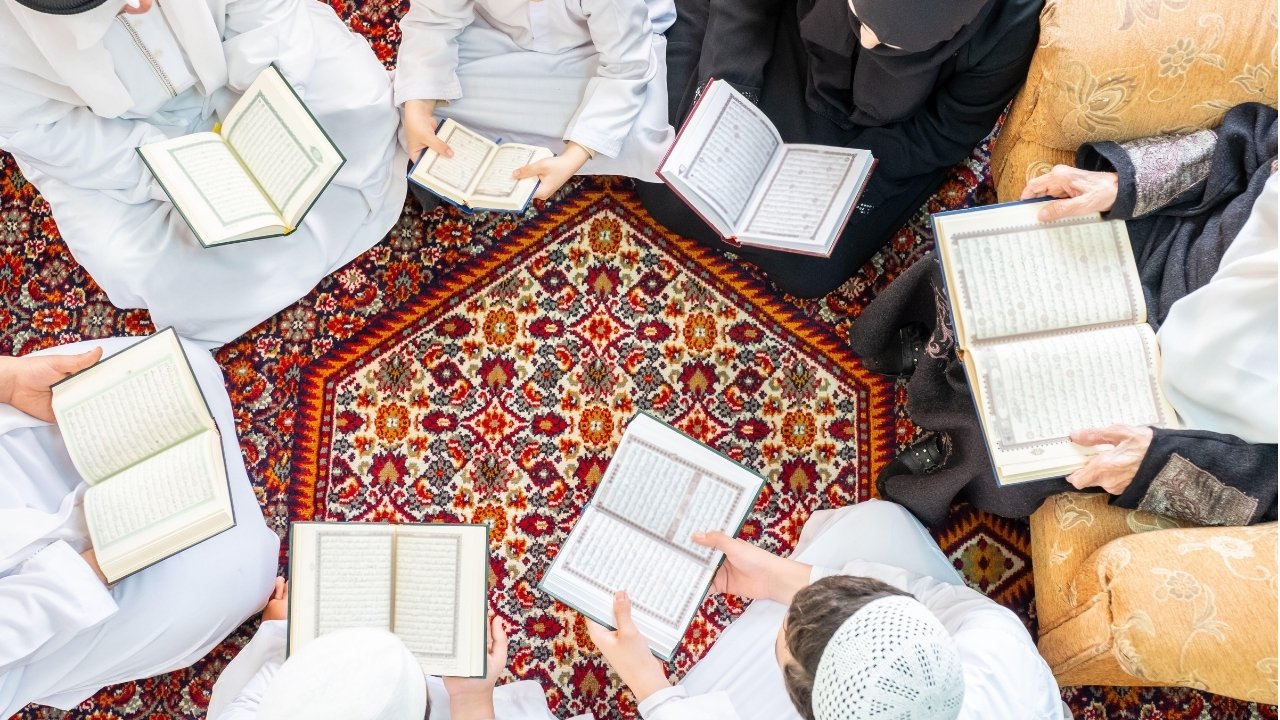
Ramadan is the month of the Quran. It was in this blessed month that the words of Allah were first sent down as guidance for mankind. For parents at Al-Mustafa Academy, our greatest hope is that our children do not just view the Quran as a book on a shelf, but as a living companion that guides their hearts, their character, and their daily choices.
However, we understand the challenge. Between the demands of school, the physical fatigue of fasting, and the distractions of the modern world, keeping a child consistently engaged with the Quran can feel like an uphill battle. At our Islamic school in Waterbury, we see firsthand how a structured, loving approach to the Word of Allah can transform a student’s relationship with their faith.
In this guide, we share practical, age-appropriate strategies to help your child bond with the Quran this Ramadan, ensuring the “Month of Revelation” leaves a lasting impact on their souls.
1. Shift the Focus from Quantity to Quality
It is a common tradition to aim for a full completion (Khatm) of the Quran during Ramadan. While this is a noble goal for adults and older students, it can sometimes become a source of stress for younger children. If a child feels rushed to finish pages they don’t understand, the Quran can start to feel like a chore rather than a blessing.
At Al-Mustafa Academy, we encourage parents to prioritize “Tadabbur” (reflection). Instead of pushing for five pages a day, try focusing on five verses. Read the Arabic, then read the translation together, and discuss how that verse applies to their life in Connecticut today. When a child understands what Allah is saying to them, their engagement shifts from a mechanical task to a spiritual conversation.
2. Create a “Quran Sanctuary” at Home
The environment plays a massive role in how children perceive worship. If the only place a child reads the Quran is at a desk under bright lights, they may associate it strictly with “schoolwork.”
To foster a deeper connection, create a cozy Quran nook in your living room. Add soft floor pillows, a small wooden bookstand (Rehal), and warm lighting. Encourage your child to spend time there, not just for formal lessons, but for quiet reflection. When they see you sitting in that same spot, finding peace in the words of Allah, they will naturally want to follow your lead.
3. Leverage the Power of Audio
The Quran was revealed as an oral recitation. For many children, hearing the beauty of the verses is the first step toward loving them.
- In the Car: Whether you are driving to Al-Mustafa Academy or running errands in the Greater Waterbury area, play a melodious recitation in the background. Choose a Qari whose voice is clear and soothing.
- Bedtime Routine: Replace standard bedtime stories with a few minutes of Quranic audio or a story from the Quran. Hearing the words of Allah as the last thing before they sleep can have a profound effect on their subconscious heart.
4. Connect the Quran to the Masjid Experience
There is a unique barakah in reading the Quran within the walls of the Masjid. The communal energy of hundreds of believers gathered for one purpose is infectious, even for the youngest among us.
When you visit the mosque in Waterbury for Iftar or Taraweeh, bring your child’s personal Mus’haf along. Let them sit with you for a few minutes before the prayer starts to read a few lines. This builds a psychological bridge between the sacred space of Masjid Al-Mustafa and their personal relationship with the Quran. They begin to see the Masjid not just as a place for “public” prayer, but as a sanctuary for “private” connection with Allah.
5. Use Visual Aids and Interactive Tools
For the digital generation, visual engagement is key. At Al-Mustafa Academy, we often use root-word trees or “Prophet Maps” to help students visualize the stories of the Quran. You can replicate this at home:
- Quran Journaling: Encourage your child to pick one verse a day and draw a picture that represents its meaning. If the verse mentions the “gardens of Paradise,” let them paint a garden.
- The “Word of the Day”: Pick one high-frequency Quranic word (like Rahmah – Mercy, or Nur – Light). Look for that word together in the Mus’haf. This “treasure hunt” approach makes the Quran interactive and accessible.
6. Model the Behavior You Want to See
We cannot expect our children to be “Quran-centric” if we are “phone-centric.” During Ramadan, make a conscious effort to let your children see you reading.
If they walk into the room and see you deeply engrossed in the Quran, they recognize its importance without you saying a single word. Share with them a verse that moved you. Tell them, “I was feeling tired today, but I read this verse about patience, and it made me feel better.” This shows them that the Quran is a practical tool for emotional and spiritual well-being.
7. Understanding the Context (Asbab al-Nuzul)
Children are naturally curious. They love stories of heroes, battles, and miracles. The Quran is full of these, but they often need a parent or teacher to unlock the context.
If your child is learning a specific Surah at Al-Mustafa Academy, take the time to learn the story behind that Surah. Why was it revealed? What was the Prophet (SAW) going through at that time? When the verses are tied to a historical narrative, they become “sticky” in a child’s memory. They are no longer just sounds; they are chapters of a magnificent history.
8. Incentivize and Celebrate Progress
While we want our children to read for the sake of Allah, there is no harm in using small incentives to build a habit, especially for younger kids.
- The “Quran Chart”: Use a sticker chart to track the days they engaged with the Quran.
- Eid Rewards: Promise a special Eid gift specifically to celebrate their Quranic efforts.
- Public Praise: At Masjid Al-Mustafa, we believe in celebrating the achievements of our youth. Congratulate them in front of the family for their dedication. This positive reinforcement builds a “Growth Mindset” regarding their religious studies.
9. Dealing with Fatigue and Frustration
Ramadan is physically taxing. There will be days when your child is tired, cranky, or simply doesn’t want to sit still. On these days, do not force a long session.
A “Ramadan-friendly” home is one that balances discipline with mercy. If they cannot read, ask them to just listen. If they cannot listen, ask them to just look at the Arabic script and recognize a few letters. The goal is to keep the “connection” alive, even if the “intensity” varies.
10. The Role of Community Support
Finally, remember that you are not alone in this journey. The community at Masjid Al-Mustafa is here to support you. From our specialized Quran programs at Al-Mustafa Academy to our youth circles, we provide the village it takes to raise a child on the Sunnah.
Peer influence is a powerful tool. When your child sees their friends at the Masjid or school valuing the Quran, it becomes “cool” and desirable. This is why being part of a vibrant, active community in Waterbury is so essential for the long-term spiritual health of our children.
Conclusion: Planting Seeds for a Lifetime
The efforts you make this Ramadan may seem small, but you are planting seeds that will grow for decades. Every time your child opens the Quran, every time they struggle through a difficult verse, and every time they ask a question about Allah’s Word, they are building their identity.
At Al-Mustafa Academy, we are honored to walk this path with you. By combining the structured learning of our school with the spiritual atmosphere of Masjid Al-Mustafa, we can ensure that our children grow up with the Quran not just in their hands, but in their hearts.
May Allah make our children the “People of the Quran” and allow this Ramadan to be a turning point in their spiritual lives.
Quran Engagement Checklist for Parents:
- [ ] Set up a dedicated, quiet reading corner.
- [ ] Choose a specific time each day for family Quran reflection (e.g., 20 mins before Iftar).
- [ ] Pick a Quranic “Word of the Week” to study together.
- [ ] Celebrate every small milestone with hugs and encouragement.
- [ ] Ensure your child sees you reading and enjoying your own Mus’haf.