For Muslim parents, one of the most significant decisions we make is how to educate our children. We want them to excel academically, but we also want their hearts to be anchored in the Deen. In an increasingly complex world, the environment in which a child grows up plays a pivotal role in shaping their identity, morals, and future.
If you are looking for an Islamic school in Waterbury, you are likely seeking a balance between secular excellence and spiritual growth. At Al-Mustafa Academy, we understand that education is not just about memorizing facts; it is about nurturing the Fitra (natural inclination toward God) of every child.
In this guide, we will explore the essential factors to consider when choosing the right Islamic school and why local community-based education is the cornerstone of a child’s Islamic identity.
1. The Importance of a Strong Islamic Foundation
The primary reason parents seek out an Islamic school is to provide their children with a worldview rooted in the Quran and Sunnah. A high-quality Islamic school does more than just add a “religion class” to a standard curriculum. It integrates Islamic values into every aspect of the day.
When researching schools, ask how they handle character development (Akhlaq). At Al-Mustafa Academy, we believe that being a good student and being a good Muslim go hand-in-hand. Whether it is through daily prayers, learning the stories of the Prophets, or practicing kindness toward peers, a school should be a sanctuary where a child’s faith can flourish.
2. Curriculum Excellence: Balancing Deen and Dunya
A common misconception is that choosing an Islamic school means compromising on academic standards. This should never be the case. The best Islamic schools provide a rigorous academic environment that prepares students for college and professional careers while maintaining a focus on spiritual literacy.
For parents in Connecticut, finding a reputable Islamic school in Waterbury means looking for a curriculum that includes:
- Core Subjects: Strong foundations in Mathematics, Science, and Language Arts.
- Islamic Studies: A structured approach to Fiqh, Seerah, and Aqeedah.
- Quranic Literacy: Teaching children not just how to recite, but how to understand and live by the Quran.
3. The Role of Language: Arabic Classes in Waterbury
Arabic is the language of the Quran and the key to unlocking a deeper understanding of our faith. When choosing a school, evaluate their Arabic language program.
Is the focus merely on phonics, or is there a path toward comprehension? Many parents in our community specifically look for Arabic classes in Waterbury that can cater to different age groups. Proficiency in Arabic allows children to connect directly with the word of Allah, making their daily prayers and Quranic readings more meaningful. As we continue to expand our services, our goal is to ensure every student feels confident in their linguistic heritage.
4. Community and Environment
A school is more than just a building; it is a community. For children living in the West, having a peer group that shares their values is vital. It prevents the “identity split” that many Muslim children feel when they have one life at home and a completely different life at school.
By attending a school connected to Al-Mustafa Academy, children grow up within the Masjid ecosystem. They see the Masjid as a second home. This sense of belonging is a powerful shield against the negative peer pressures that often arise during the teenage years.
5. Location and Accessibility
For busy families, proximity matters. Having a local Islamic school in Waterbury ensures that your child’s education is integrated into your local life. It makes it easier for parents to be involved, attend parent-teacher meetings, and participate in community events.
Choosing a school close to home also means your child will make friends who live in the same neighborhood, allowing for “halal” social circles to form naturally outside of school hours.
6. Qualified and Relatable Educators
The teachers are the heart of any school. In an Islamic setting, teachers serve as Murabbi (nurturers). You want educators who are not only qualified in their respective subjects but who also serve as positive Islamic role models.
When you visit a potential school, observe the interaction between students and teachers. Is there mutual respect? Do the teachers inspire a love for Allah and His Messenger (SAW)? At Masjid Al-Mustafa, we pride ourselves on having staff members who understand the challenges of growing up as a Muslim in modern-day America.
7. Extracurricular Activities and Holistic Growth
Education happens both inside and outside the classroom. Does the school offer activities that promote physical health and social skills? From sports to community service projects, extracurricular activities help develop a well-rounded personality.
Islamic schools often lead the way in teaching social responsibility. Programs that encourage students to give back to the Waterbury community help them understand the Islamic concept of Sadaqah and their duty toward their neighbors.
8. Financial Considerations and Sustainability
Quality education requires resources, but it should also be accessible. Many Islamic schools offer financial aid or multi-child discounts. When choosing a school, consider it an investment in your child’s Akhirah (hereafter). While public schools are free, the spiritual and moral “insurance” provided by an Islamic environment is priceless.
Why Choose Al-Mustafa Academy?
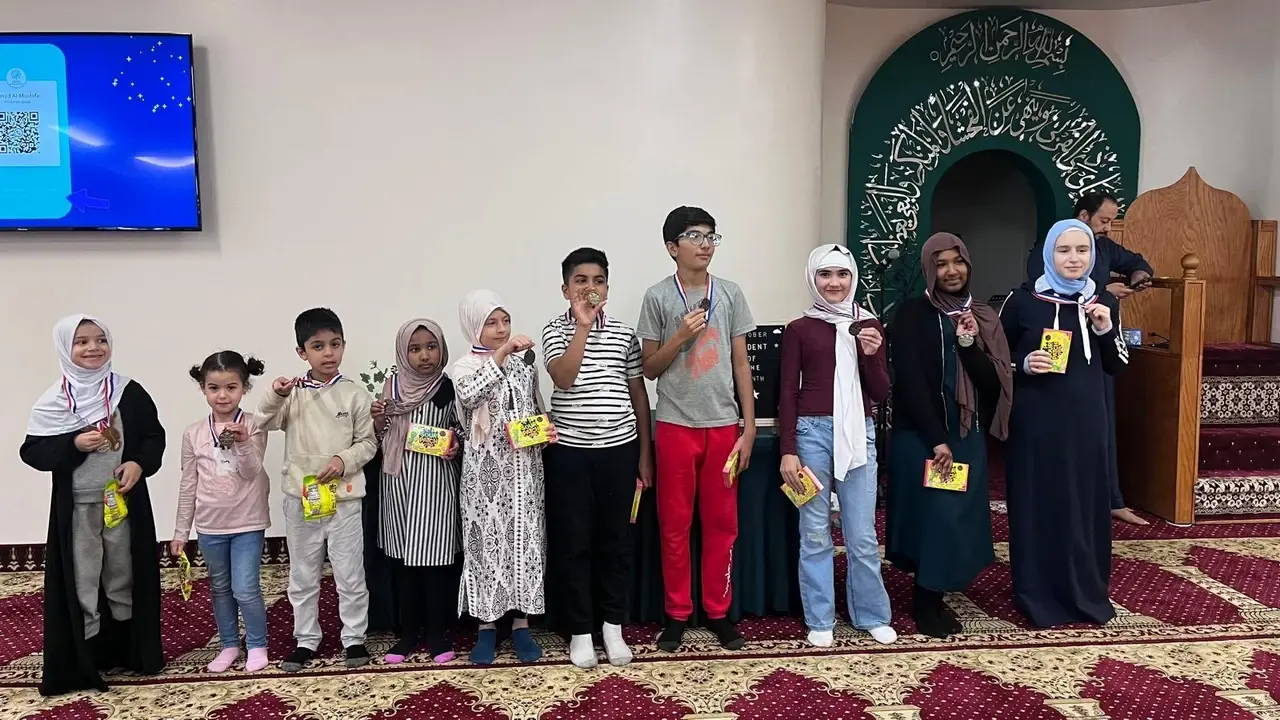
At Masjid Al-Mustafa, we are committed to providing the Muslim community of Waterbury with a space that fosters both spiritual and intellectual growth. Our school is designed to meet the unique needs of our youth.
We don’t just teach lessons; we build futures. By combining a safe, Islamic environment with dedicated educators and a focus on core values, we ensure that our students graduate with the confidence to navigate the world as proud, practicing Muslims.
If you are looking for specialized instruction, such as Arabic classes in Waterbury, or a full-time Islamic educational environment, we invite you to visit us and see the difference a community-centered education can make.
Conclusion: Making the Final Decision
Choosing the right school is a process that requires prayer (Istikhara), research, and visits. We encourage all parents in the Waterbury area to:
- Visit the Campus: See the classrooms and meet the administration.
- Review the Curriculum: Ensure it meets your academic and spiritual expectations.
- Talk to Other Parents: Hear firsthand experiences from the community.
Your child’s education is the greatest gift you can give them. Ensure that the gift includes the light of Iman and the strength of knowledge.
Ready to take the next step? Learn more about our programs at Al-Mustafa Academy and discover why we are the preferred choice for an Islamic school in Waterbury. Together, let’s build a generation that excels in this life and the next.